Introduction
The 6.7L Cummins in your Ram has a well-known weak spot: the OEM EGR cooler. Cummins itself has documented coolant leaks at the EGR cooler's supply and return hoses, clamps, and interfaces in Technical Service Bulletin TSB200177. The problem traces back to hose compression set and lost clamp load over time.
For truck owners, that translates into a real headache. A leaking or failing EGR cooler can mean white exhaust smoke, coolant loss, and in worse cases, coolant working its way into the cylinders or exhaust system.
Fixing the problem starts with understanding your options. This guide breaks down how coolant bypass kits work, why owners install them, the legal line between a bypass and a full EGR delete, top kit options, and what installation actually costs.
Key Takeaways
- EGR cooler issues on the 6.7L Cummins often start at the hose, clamp, and interface level, not just internal cracking
- A coolant bypass kit keeps the EGR valve functional, supporting emissions compliance
- White exhaust smoke is a verified sign of coolant entering the cylinders or exhaust
- Fleece Performance's coolant bypass kit runs $398.99 to $419.99, far less than a genuine Mopar EGR cooler
- Installation typically takes 3-4 hours and can be done at home or through a diesel shop
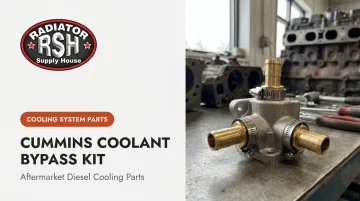
What Is a Cummins Coolant Bypass Kit and How Does It Work?
A coolant bypass kit changes how coolant flows through the rear of the engine block, aiming to reduce thermal stress in an area of the cooling system that runs hotter than the front cylinders.
On the 6.7L Cummins, the EGR cooler sits directly in the engine coolant loop, connected through dedicated supply and return hoses, clamps, and a hard pipe.
That's exactly where Cummins' TSB (Technical Service Bulletin) found problems. Rubber hose sections lose their seal over time as the material compresses, which loosens clamp load and creates external coolant leaks.
How the Plumbing Works
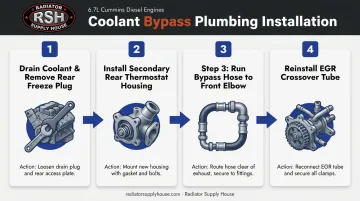
Most kits on the market, including Fleece Performance's version, follow a similar installation approach:
- Drain the coolant and remove the rear engine-block freeze plug
- Install a secondary rear thermostat housing
- Run a bypass hose from the rear housing to a front bypass elbow
- Remove and reinstall the EGR crossover tube and cooler elbow for access
Fleece's 2019-2024 kit uses black braided nylon hose with AN fittings and O-ring seals, opening at 184°F. Its 2007.5-2018 kit uses stainless-steel braided line instead. Neither uses silicone hose, so don't assume that material across every brand.
Important clarification: Fleece's own documentation describes this as a rear-cylinder coolant-flow solution, not a device that removes coolant from the EGR cooler itself. The OE thermostat stays in service, and the EGR crossover tube gets reinstalled once the work is done.
Don't expect a kit that fully diverts coolant away from the EGR cooler. Most popular kits on the market address rear-cylinder flow and temperature consistency rather than eliminating cooler flow entirely.
Some owners pair this modification with a tuner or programmer to adjust EGR duty cycle, aiming for more consistent temperatures across all six cylinders. That's a separate upgrade, though, not something the bypass kit does on its own.
Why 6.7 Cummins Engines Need This Upgrade: Signs & Benefits
The EGR cooler's job is to cool exhaust gas before it re-enters the intake. That means it's constantly cycling between hot exhaust gas and cold coolant, cycle after cycle, mile after mile.
Bullet Proof Diesel notes that this repeated expansion and contraction can stress the factory tube-and-fin internals over time, eventually leading to cracks that let coolant escape into the intake or exhaust path.
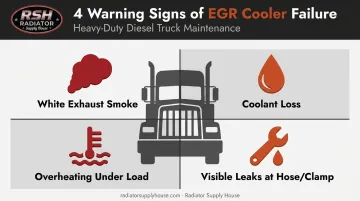
Warning Signs to Watch For
- White exhaust smoke — a verified sign of coolant reaching the cylinders or exhaust system
- Coolant loss without an obvious external leak
- Overheating, particularly under load or towing
- Visible leaks at the EGR cooler's hose, clamp, or interface connections (the exact failure point Cummins documented in its TSB)
We couldn't verify a specific failure-rate percentage or "common failure mileage" for this issue in Cummins, Ram, or NHTSA data, so treat any number you see quoted elsewhere with some skepticism.
What is documented: Cummins recommends EGR cooler cleaning service at 67,500 and 135,000 miles in the 2011 Ram diesel maintenance schedule, which tells you the factory expects buildup and wear in this area over time.
Cost Comparison: Replacement vs. Prevention
| Repair Option | Price Range |
|---|---|
| Genuine Mopar EGR cooler (2017 Ram 2500) | $455.40 – $690.00 |
| Genuine Mopar EGR cooler kit (2013-2018) | $1,029.00 – $1,897.89 |
| Aftermarket replacement cooler | ~$1,245.00 + $200 core charge |
| Fleece coolant bypass kit | $398.99 – $419.99 |
That price gap is a big reason preventive coolant management appeals to owners. A bypass kit doesn't replace a cracked cooler, though: it manages coolant flow and temperature as a preventive measure, not a fix for a part that's already failed.
Some owners also report lower measured EGR temperatures and less cylinder wash from EGR gases after installing a rear-cylinder bypass. Fleece and its retailers claim these benefits, but independent before-and-after temperature testing wasn't available to confirm the numbers.
Coolant Bypass Kit vs EGR Delete: Key Differences
This distinction matters more than most owners realize, especially if the truck stays street-legal.
A coolant bypass kit changes coolant routing. The EGR valve keeps operating exactly as it did from the factory. A full EGR delete removes the EGR system's function entirely, disabling exhaust gas recirculation.
That difference has real legal weight. The EPA's 2020 enforcement guidance explicitly lists EGR systems, including EGR cooler bypassing, among emissions-related parts and design elements.
The Clean Air Act prohibits selling or installing any part whose principal effect is to bypass, defeat, or disable an emissions control when the seller or installer knows, or should know, that's the intended use.
A few things to keep in mind:
- Full EGR deletes for on-road use fall squarely within EPA's tampering prohibition
- EPA generally won't pursue action when there's a documented "reasonable basis," such as an identical-design replacement or a CARB Executive Order
- Keeping the EGR valve installed doesn't automatically guarantee compliance—EPA reviews products individually, with no blanket approval for every bypass kit
Here's how the two approaches compare at a glance:
| Aspect | Coolant Bypass Kit | Full EGR Delete |
|---|---|---|
| EGR valve function | Continues operating as designed | Disabled entirely |
| Exhaust gas recirculation | Still active | Stopped |
| Legal basis needed | Reasonable-basis documentation or CARB EO | None recognized for on-road use |
| EPA tampering risk | Lower, case-by-case review | High, falls under prohibition |
Verify current federal and state emissions rules before modifying your truck, particularly if you're planning to keep it registered for street use.
Popular Coolant Bypass Kits for 6.7 Cummins
Fleece Performance is the name that comes up most often in this space. Officially, the company markets it as the "Fleece Performance Coolant Bypass," available across three fitment groups:
| Model Years | Official Price |
|---|---|
| 2007.5-2012 | $419.99 |
| 2013-2018 | $398.99 |
| 2019+ | $398.99 |
Retailer listings for the 2019-2024 version include front and rear thermostat housings, black braided nylon hose, AN/O-ring fittings, EGR crossover gaskets, and mounting hardware.
Reviews on that listing sit at 3.8 out of 5 from a small sample of six, with feedback split between praise for kit completeness and complaints about instructions on Aisin-transmission trucks. That's a limited data point, not proof of long-term reliability across the fleet.
What to Check Before Buying
- Material quality — stainless-steel braided line versus nylon hose, depending on model year
- Fitment — confirm your exact model year against the kit's listed application range
- Warranty terms — ask the retailer directly, since manufacturer documentation on this varies by seller
If your bypass install turns into a bigger cooling system refresh, that's where sourcing quality complementary parts matters. Radiator Supply House stocks OEM-equivalent ICEBOX-branded reservoirs, radiators, and cooling components built in both copper-brass and all-aluminum construction for heavy-duty diesel applications.
If you're already draining the system and inspecting hoses, it's a good time to check your reservoir and radiator condition too, rather than waiting for the next failure to force the issue.
Installation Considerations & Cost
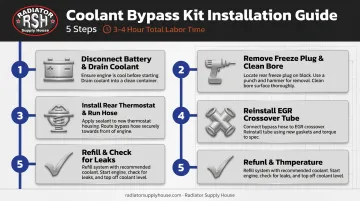
Fleece's published installation instructions specify 3-4 hours of labor for both the 2007.5-2018 and 2019-2022 fitment groups. The job involves:
- Disconnecting the battery and draining the coolant system
- Removing the rear freeze plug and cleaning the block bore
- Installing the rear thermostat housing and running the bypass hose
- Removing and reinstalling the EGR crossover tube and cooler elbow for clearance
- Refilling the system and checking for leaks
You'll need a few basic tools before starting:
- Basic hand tools (sockets, wrenches, screwdrivers)
- A drain pan for coolant removal
- A pry bar for freeze plug removal Fleece doesn't publish an official difficulty rating, but the freeze-plug and rear-block access work push this past a simple bolt-on job. It's a reasonable DIY project for someone comfortable with engine bay work, though a professional install removes the guesswork.
Cost example: One diesel shop, Strictly Diesel, lists a $240/hour rate for aftermarket upgrades.
| Cost Item | Estimate |
|---|---|
| Labor (3-4 hrs at $240/hr) | $720 to $960 |
| Kit price | $398.99 to $419.99 |
| Illustrative total | $1,119 to $1,380 |
| Treat this as one shop's example rate, not a national average, since labor rates vary widely by region. |
After installation, flush the coolant system fully and monitor for leaks over the first few hundred miles. Check hose connections and clamp torque again after the initial heat cycles, since that's exactly where the factory system showed weakness in the first place.
If the factory thermostat housing or freeze-plug bore gets damaged during removal, replacement thermostats and gaskets for these applications are available through cooling system suppliers like Radiator Supply House.
Frequently Asked Questions
What does the coolant bypass do on a 6.7L Cummins?
It reroutes coolant flow at the rear of the engine using a secondary thermostat, aiming for more consistent cylinder temperatures. This is a coolant management upgrade — it won't repair a cracked EGR cooler directly.
Is the Fleece coolant bypass worth it for a 6.7L Cummins?
At under $420 for parts, it's inexpensive compared to a genuine EGR cooler replacement running $455 to nearly $1,900. Whether it's worth it depends on your goals. It improves coolant flow, but it doesn't guarantee cooler failure prevention.
Is a coolant bypass kit legal for daily-driven trucks?
Kits that keep the EGR valve functional avoid the outright ban EPA places on full EGR deletes. That said, EPA reviews products case by case, so check current federal and state emissions rules before installing anything.
How much does it cost to install a coolant bypass kit?
Kit prices run $398.99 to $419.99 for Fleece's version. Add labor at 3-4 hours, and total installed cost lands somewhere around $1,100 to $1,400, depending on your local shop rate.
Can I install a coolant bypass kit myself?
Yes, if you're comfortable with basic engine bay work, coolant system drains, and freeze plug removal. It's a moderate DIY project rather than a beginner one, and a shop install ensures proper fitment if you're unsure.
Does a coolant bypass kit delete the EGR system entirely?
No. It only changes coolant routing at the rear of the block. The EGR crossover tube gets reinstalled, and the EGR valve keeps functioning exactly as it did before the install.