Introduction
Your engine oil cooler has one job: keep oil temperature stable so it doesn't break down under heat and stress. When it fails, the damage spreads fast: contaminated coolant, overheated oil, and eventually a damaged engine.
Replacement costs swing wildly. A light-duty truck with an accessible cooler might run a few hundred dollars. A buried diesel truck cooler, or a heavy equipment assembly, can climb into four figures.
This guide breaks down realistic pricing by equipment and truck type, the factors that drive costs up or down, whether DIY makes sense, and how to avoid overpaying for the repair.
Key Takeaways
- Passenger vehicles average $661-$791; diesel trucks and heavy equipment cost far more
- Labor accessibility and OEM vs. aftermarket parts drive the biggest price swings
- Integrated cooler/filter housings and buried engine-bay locations mean longer labor hours
- Ignoring leaks or milky oil turns a $700 repair into an engine rebuild
- Quality aftermarket parts with real warranty coverage prevent repeat failures
How Much Does Engine Oil Cooler Replacement Cost? (Pricing Overview)
There's no single price tag for this repair. Cost depends on your vehicle type, how the cooler is designed, and whether the job is a quick bolt-on swap or requires tearing into other engine components first.
Typical Cost Ranges by Vehicle Type
For standard passenger cars and light trucks with easily accessible coolers, RepairPal's national estimate puts total replacement at $661 to $791, split roughly between $425-$445 in parts and $236-$346 in labor. That range excludes taxes and any related repairs found along the way.
Model-specific pricing varies a lot:
- Ford F-150: $322-$409
- Nissan Altima: $748-$986
- Toyota Camry: $1,201-$1,299
- Toyota RAV4: $1,220-$1,355
Diesel pickups and turbo engines tell a different story. The Ford 6.0L Powerstroke is the textbook example, with its oil cooler buried below the intake manifold, turbocharger, and oil filter housing, turning a simple part swap into a multi-hour teardown.
Some shops quote $3,000-$7,000 when the job overlaps with EGR cooler, turbo tube, or HPOP work. Even a cooler-only repair on this platform lands well above passenger-car pricing.
Heavy equipment, commercial trucks, and industrial machinery sit in their own category entirely. Larger cooling assemblies, specialized labor, and manufacturer-specific parts push costs well above passenger-vehicle territory.
This is exactly where Radiator Supply House's customers, construction crews, ag operators, and fleet managers, spend most of their time and budget.
Parts vs. Labor Cost Breakdown
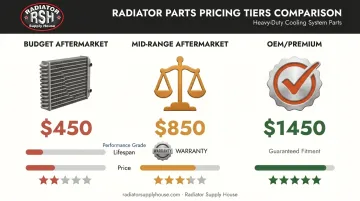
Parts pricing falls into three rough tiers:
- Budget aftermarket: Cheapest option, often thin-core construction that trades longevity for a low price tag
- Mid-range aftermarket: Solid build quality, reasonable warranty, competitive with OEM performance
- OEM/premium: Highest cost, guaranteed fitment, but slowest to source on discontinued models
Labor scales with access difficulty: accessible, standalone bolt-on coolers run 2-3 hours, while buried or integrated designs requiring disassembly of surrounding components stretch to 6-8+ hours.
Shop rate matters too. According to AAA's 2026 labor rate survey, most mechanics charge $120-$159 per hour, with regional swings below $100 and above $200.
Watch for these common add-ons to the final bill:
- New gaskets and seals
- A coolant flush
- EGR cooler replacement (common on diesels sharing the same access point)
Key Factors That Affect the Cost of Replacement
Price depends on technical design, part sourcing, and your local labor market, not just how old the vehicle is.
Vehicle & Engine Design
Integrated oil cooler/filter housings cost more than standalone bolt-on units, both in parts and labor. A standalone cooler mounts externally and swaps out in a couple of hours. An integrated design often means removing the filter housing, associated lines, and sometimes the turbo or intake to reach it.
OEM vs. Aftermarket Parts
Reputable aftermarket coolers can match OEM cooling capacity at a meaningfully lower price. The catch: not all aftermarket parts are equal. Industry commentary from Engine Builder magazine notes that some suppliers build parts as good as or better than OE, while others cut corners on core thickness just to hit a lower price point.
The thin-core budget option might save you $50 upfront. It's rarely worth it when it fails again in 18 months.
Geographic & Shop Labor Rates
Independent shops typically run $75-$125/hour, while dealership rates land at $125-$175/hour or higher. Cost of living in your region matters just as much: the same job costs noticeably more in a major metro than in a rural service area.
Hidden or Additional Repairs Found During Teardown
Once a mechanic opens up the engine bay, surprises happen:
- Corroded coolant hoses that crumble on removal
- Degraded gaskets that won't reseal properly
- Seized fasteners that need extra time (and sometimes replacement bolts)
Any of these can add an hour or more of labor and a chunk of extra parts cost.
Heavy-Duty & Industrial Equipment Considerations
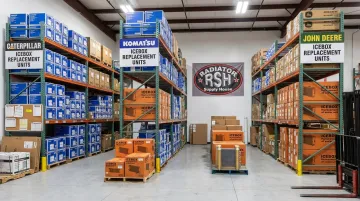
Construction, agricultural, and commercial fleet equipment often need larger-capacity coolers and manufacturer-specific parts, think Caterpillar, Komatsu, John Deere, Freightliner, and Volvo. Sourcing genuine OEM parts for these machines can mean weeks of lead time if the part isn't in regional stock.
This is where a specialized cooling-system supplier changes the equation. Radiator Supply House stocks ICEBOX Replacement oil coolers and combo units across these exact brands, including specific SKUs for Caterpillar D6H dozers, Komatsu PC228LC-2 excavators, and John Deere 450G-series crawlers. Fleet and equipment operators aren't stuck waiting on backordered OEM parts while a machine sits idle.
Signs You Need an Oil Cooler Replacement Now
Catching a failing cooler early keeps this an affordable repair instead of an engine rebuild.
Watch for these warning signs:
- Oil leaks pooling around the engine block or near the cooler mounting area, especially noticeable after the vehicle sits overnight, are usually the first visible clue.
- Milky or coffee-colored oil on the dipstick signals coolant mixing with oil internally. Contaminated oil loses its ability to lubricate properly, and running the engine this way accelerates wear on bearings and internal components.
- Persistent overheating or unexplained coolant loss without any visible external leak often points to an internal oil cooler failure. Per an FCA service bulletin, oil-cooler erosion causes exactly this pattern: overheating, milky fluid in the coolant reservoir, and gradual coolant loss with no obvious puddle underneath.
Left unaddressed, this progresses quickly. Contaminated oil and reduced cooling capacity stress the engine simultaneously, shortening engine life fast.
DIY vs. Professional Replacement
Whether you tackle this yourself depends almost entirely on cooler design.
Time required:
- Accessible, standalone coolers: 1-2 hours with basic tools
- Buried or integrated designs: 6-8+ hours, sometimes matching Ford's official 5.5-7.8 hour labor allowance for 6.0L Powerstroke models
Beyond how long the swap takes, the more pressing question is often how long you can wait before tackling it.
Can you keep driving with a faulty cooler?
Light, non-towing use may be tolerable for a short stretch if there's no visible leak or contamination yet. But the risk escalates quickly once you see leaking or milky oil. Strenuous driving raises oil temperature further, and a compromised cooler can't keep up. Replacement, not risk management, is the right call once symptoms appear.
Should you DIY it?
- Good DIY candidate: Standalone, externally mounted coolers with clear access and basic hand tools
- Leave it to a pro: Integrated housings, buried designs, or anything requiring intake/turbo removal
Getting torque specs wrong on an integrated unit, or missing a seal during reassembly, can cause a leak that undoes the entire repair. For anything beyond a simple bolt-on swap, professional installation is worth the labor cost.
How to Save Money on Oil Cooler Replacement
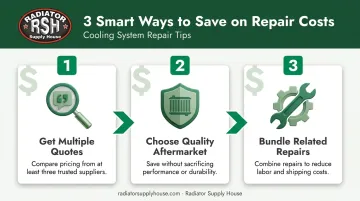
A few practical moves can meaningfully cut your final bill:
- Get multiple quotes. Labor rates vary widely between independent shops and dealerships for the identical job, sometimes by $50-$100 an hour.
- Choose quality aftermarket over the cheapest option. A cooler with solid warranty coverage costs a bit more upfront but avoids paying for labor twice when a thin-core budget part fails early. Radiator Supply House's ICEBOX Replacement components, for example, carry a lifetime warranty and cover hard-to-find brands like Caterpillar, Komatsu, and John Deere.
- Bundle related repairs into one visit. If gaskets, a coolant flush, or a related component like an EGR cooler need attention anyway, doing it all in a single service call means you're not paying for teardown labor twice.
Frequently Asked Questions
How long does it take to replace an engine oil cooler?
Accessible, standalone coolers typically take 1-2 hours. Buried or integrated designs can run 6-8+ hours, because surrounding components like the intake or turbo need removal first.
Can I drive with a faulty engine oil cooler?
Short-term, light, non-towing use may be tolerable if there's no visible leak yet. Once leaking or oil contamination appears, continued driving, especially towing, risks serious engine damage.
What are the signs of a failing engine oil cooler?
The three main warning signs are oil leaks around the mounting area, milky or coffee-colored oil on the dipstick, and unexplained overheating or coolant loss without a visible external leak.
How serious is an engine oil cooler leak?
Very serious. A leak reduces both lubrication and cooling capacity at the same time, and that combination can damage bearings and internal components quickly if not addressed.
What causes an oil cooler to fail?
Common causes include heat stress and erosion over time, age and high mileage, deteriorating gaskets, and internal contamination between the coolant and oil circuits.
Is it worth repairing or replacing a bad oil cooler?
Replacement is almost always far cheaper than the alternative. A failed cooler left in service can lead to engine damage costing many times more than the repair itself.